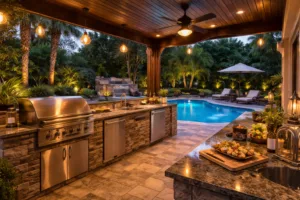
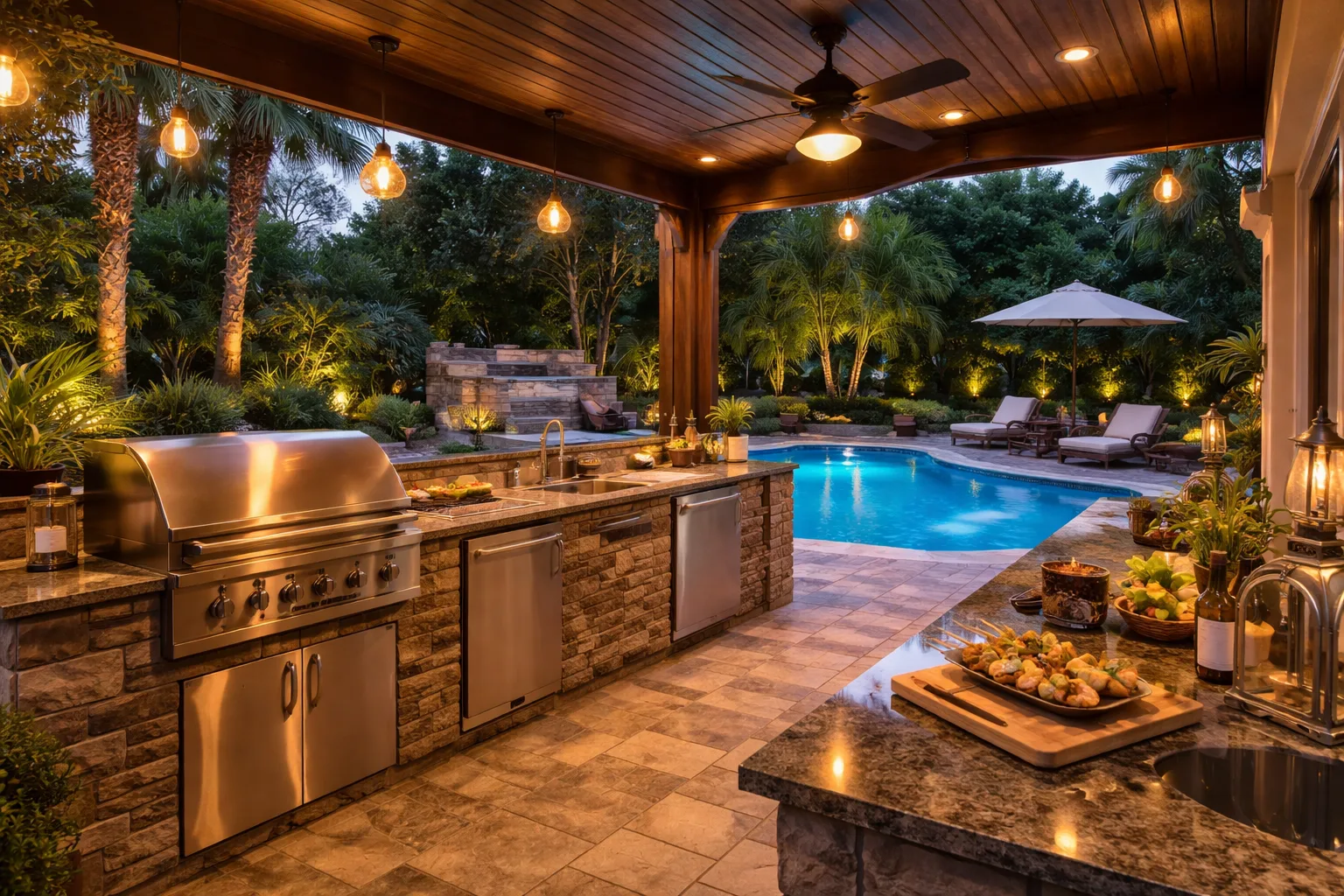
Outdoor kitchens and pool areas can turn a backyard into a true living space. They make entertaining easier, improve how the property functions, and can add real value to the home. But they also bring electricity into wet, exposed, high-use environments, which means the electrical design has to be handled very carefully.
An outdoor kitchen may include refrigeration, task lighting, countertop receptacles, ceiling fans, audio equipment, built-in appliances, and decorative lighting. A pool area may include pumps, heaters, automation controls, underwater lighting, landscape lighting, and sometimes spa or hot tub equipment. In both cases, the electrical work has to be designed for safety, load, durability, and code compliance.
This is not a part of the project where shortcuts make sense. A well-designed outdoor electrical system should be safe in wet conditions, capable of supporting the equipment being installed, and built to last through weather, seasonal changes, and regular use.
Why Outdoor Electrical Design Requires Special Planning
Outdoor living spaces are different from interior rooms because they combine electricity with moisture, weather exposure, metal surfaces, and high-powered equipment. Around pools and spas, the risk is even greater because water and wet surfaces can increase the chance of shock. The U.S. Consumer Product Safety Commission specifically warns that outlets, switches, extension cords, pool lights, and nearby electrical equipment can all create hazards around pools and spas.
That is why outdoor electrical design should never be treated as an afterthought. These projects need more than just a few extra outlets outside. They need a full plan that accounts for safety, proper equipment placement, protective devices, and future use.
Start With Electrical Load Planning
One of the biggest mistakes in outdoor projects is designing the layout first and leaving electrical planning for later. The better approach is to begin with a full list of what the space will include.
For an outdoor kitchen, that may mean:
Outdoor refrigerator
Wine fridge or beverage center
Ice maker
Built-in grill ignition
Electric smoker or pizza oven
Task lighting
Accent lighting
Ceiling fans
TV
Speakers
Convenience receptacles
For a pool area, that may mean:
Pool pump
Pool heater
Salt system
Automation panel
Pool house subpanel
Outdoor shower accessories
Security lighting
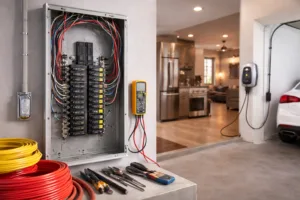
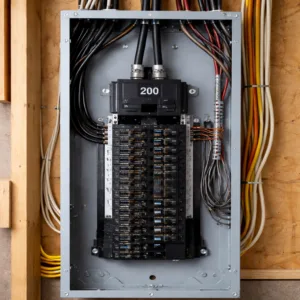
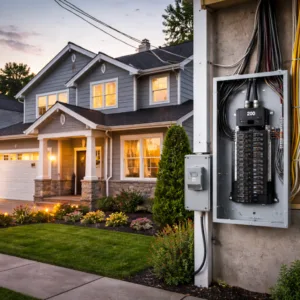
Every one of those items affects circuit count, breaker sizing, wire sizing, and sometimes even the capacity of the main electrical panel. If the house already has a smaller service and the homeowner is adding several high-demand outdoor features, a panel evaluation may be needed before the project moves forward.
Dedicated Circuits Matter
Outdoor kitchens and pool areas often need more dedicated circuits than homeowners expect. Refrigeration equipment, pumps, heaters, motor-driven systems, and certain appliances should not be tied into random existing circuits just because power is nearby.
Dedicated circuits help with three important things:
They reduce the chance of overloads
They improve reliability
They make troubleshooting easier later
This matters especially around pools, where equipment failure is not just annoying but can affect safety and operation. Modern code expectations also continue to expand protection for outdoor and pool-related electrical equipment, especially in wet areas and around receptacles near the pool environment.
GFCI Protection Is Essential
If there is one feature that defines safe outdoor electrical design, it is GFCI protection.
A ground-fault circuit interrupter is designed to shut off power quickly when it detects current flowing where it should not. In outdoor areas and wet environments, that protection is critical.
Outdoor receptacles at homes generally require GFCI protection, and around pools and spas that protection becomes even more important. The reason is simple: water, wet surfaces, bare feet, and powered equipment create conditions where even a small fault can become dangerous.
In practical terms, that means an outdoor kitchen should not rely on basic indoor-style outlets. It should use properly selected exterior devices, including weather-resistant GFCI receptacles and appropriate covers built for outdoor use. Manufacturers also offer self-testing weather-resistant GFCI devices specifically for these environments.
Weather-Resistant Devices and Covers Are Not Optional
A backyard electrical system is only as reliable as the components exposed to the weather.
That includes:
Receptacles
Switches
Lighting fixtures
Junction boxes
Disconnects
Fittings
Covers
Outdoor kitchens deal with rain, humidity, heat, grease, UV exposure, and winter weather. Pool equipment areas deal with water, vibration, chemicals, and corrosion. Standard interior electrical devices are not built for those conditions.
Weather-resistant receptacles and properly rated outdoor covers help improve both safety and longevity. Self-testing GFCIs designed for exterior use also add another layer of reliability because they continuously monitor whether the protective function is still working.
For Long Island homes, where seasonal weather swings and moisture can be especially tough on materials, this is a major part of building something that lasts.
Pool Bonding Is a Major Safety Requirement
Pool electrical work involves more than just grounding. Bonding is a separate and extremely important safety measure.
Bonding is designed to keep metal parts and conductive surfaces at the same electrical potential, which helps reduce shock risk. That includes things like metal ladders, rails, pumps, heaters, and other conductive parts associated with the pool system.
NFPA highlights equipotential bonding requirements in pool-related electrical rules and emphasizes that code-compliant installation is central to swimmer safety.
For homeowners, the big takeaway is this: pool bonding is not a small technical detail. It is one of the most important safety components in the entire project. If pool equipment is being installed or replaced, bonding has to be handled correctly by a licensed electrician who understands pool-specific code requirements.
Surge Protection Should Be Part of the Conversation
Modern outdoor living spaces often include sensitive electronics. That may mean automation systems, LED drivers, Wi-Fi-connected controls, audio systems, TVs, or variable-speed pool equipment.
That is one reason whole-home surge protection has become much more important. The 2020 National Electrical Code added Section 230.67, requiring surge-protective devices for dwelling unit service entrances in many new and replaced residential electrical installations. The stated reason is the growing number of sensitive electronics in homes.
DITEK also describes a layered protection approach that includes:
Protection at the electrical service entrance
Protection for alternate pathways such as phone and internet lines
Point-of-use protection for especially sensitive equipment
Ongoing monitoring and replacement as devices wear out over time
That makes surge protection especially relevant for outdoor kitchens and pool areas, where expensive controls and connected equipment are becoming more common.
Lighting Is About Safety as Much as Style
Lighting should absolutely make an outdoor space look great, but it also has to make the space usable and safe.
An outdoor kitchen needs practical task lighting at cooking and prep areas. Walkways and transitions around the yard should be illuminated clearly enough to help prevent trips and falls. Pool decks and steps should be visible at night without creating glare or awkward dark spots.
Pool lighting requires especially careful planning because underwater lights and nearby fixtures are part of the overall electrical safety environment. CPSC identifies underwater lights as one of the electrical hazards found around pools and spas.
The best outdoor lighting plans combine ambiance with visibility, serviceability, and proper protection for wet or damp locations.
Avoid Extension Cords and Temporary Solutions
Outdoor kitchens and pool zones should be wired for the way they will actually be used. They should not rely on extension cords, temporary splitters, or improvised power setups.
The CPSC specifically includes extension and power cords among the electrical hazards around pools, spas, and hot tubs.
If a space needs regular power for a refrigerator, TV, sound system, blender, charger, or lighting feature, it should have permanent code-compliant receptacles in the correct locations. Temporary wiring solutions outdoors often become long-term safety problems.
Maintenance and Inspection Still Matter After Installation
Outdoor electrical systems should not be treated as install-once-and-forget-it systems.
Over time, covers loosen, GFCIs fail, surge protection wears out, fittings corrode, fixtures get damaged, and landscaping or weather can affect exposed equipment. DITEK notes that surge protection systems deteriorate over time and require periodic review and replacement to remain effective.
That means homeowners should plan for periodic inspections, especially before the heavy-use summer season. Catching a failed GFCI, damaged cover, or worn device early is much better than finding out after a breakdown or safety issue.
What a Safe Outdoor Kitchen and Pool Electrical Plan Should Include
A well-designed setup should usually account for:
A realistic equipment list and load calculation
Dedicated circuits where needed
GFCI protection for outdoor receptacles and applicable equipment
Weather-resistant devices and in-use covers
Proper pool bonding and code-compliant pool equipment wiring
Adequate lighting for cooking, walking, and nighttime use
Permanent power in the places where it will actually be used
Panel capacity review when the project adds major load
Surge protection for sensitive controls and electronics
Room for future upgrades like spas, heaters, TVs, sound systems, or added lighting
This kind of planning helps prevent overloaded circuits, bad outlet placement, visible cords, nuisance tripping, poor nighttime visibility, and expensive rework later.
Final Thoughts
Designing an outdoor kitchen or pool area is about much more than appearance. The electrical work behind the project determines how safe, functional, and durable the finished space will be.
The best outdoor spaces are not just attractive on day one. They are practical to use, safe around water and weather, strong enough for real electrical demand, and built to support the way homeowners actually live.
For Nassau County homeowners, a professionally designed electrical plan can make the difference between a backyard that only looks finished and one that truly works for years to come.
Frequently Asked Questions
Common questions homeowners ask when planning outdoor kitchens, pool areas, and backyard electrical upgrades.
Do outdoor kitchens need dedicated electrical circuits?
In many cases, yes. Outdoor refrigerators, beverage centers, ice makers, electric smokers, lighting systems, and other built-in equipment often need dedicated circuits to prevent overloads, improve reliability, and make future servicing easier.
Do outdoor outlets need GFCI protection?
Yes. Outdoor receptacles should be protected with GFCI devices to reduce the risk of electric shock in wet or damp conditions. This is one of the most important safety requirements in outdoor electrical design.
What kind of outlets should be used in an outdoor kitchen?
Outdoor kitchens should use weather-resistant receptacles with proper in-use covers and exterior-rated boxes. Standard indoor outlets are not designed for rain, humidity, UV exposure, and temperature changes.
Can I use extension cords around a pool or outdoor kitchen?
It is not a good idea. Outdoor kitchens and pool areas should have permanent, properly placed receptacles instead of relying on extension cords or temporary power setups. Around wet areas, extension cords can create avoidable safety risks.
Why is pool bonding so important?
Pool bonding helps keep metal parts and nearby conductive surfaces at the same electrical potential, reducing the risk of shock. It is one of the most critical safety components in pool electrical work and should always be handled correctly.
Does a pool pump need its own circuit?
Usually, yes. Pool pumps and other pool equipment often require dedicated circuits based on the equipment type, load, and manufacturer specifications. Sharing these systems with unrelated loads can lead to nuisance tripping and performance problems.
Should I add surge protection for an outdoor kitchen or pool area?
It is a smart upgrade, especially if the space includes automation controls, LED lighting systems, sound equipment, TVs, or variable-speed pool equipment. Surge protection can help protect sensitive electronics from voltage spikes.
Will I need an electrical panel upgrade for a backyard project?
Possibly. If the project adds multiple new loads such as refrigeration, lighting, pool equipment, heaters, or future upgrades like a hot tub, your existing panel may need to be evaluated to make sure it has enough safe capacity.
What kind of lighting is best for outdoor kitchens and pool areas?
The best lighting plan combines safety and appearance. Task lighting is important for cooking and prep areas, while walkways, steps, decks, and pool surroundings should be lit clearly enough for safe nighttime use.
How often should outdoor electrical systems be inspected?
It is a good idea to inspect outdoor electrical systems regularly, especially before peak summer use. Weather, moisture, corrosion, landscaping activity, and normal wear can all affect receptacles, covers, GFCIs, fixtures, and equipment over time.