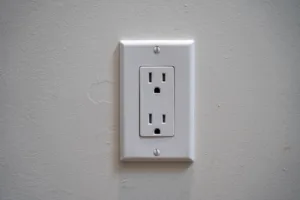
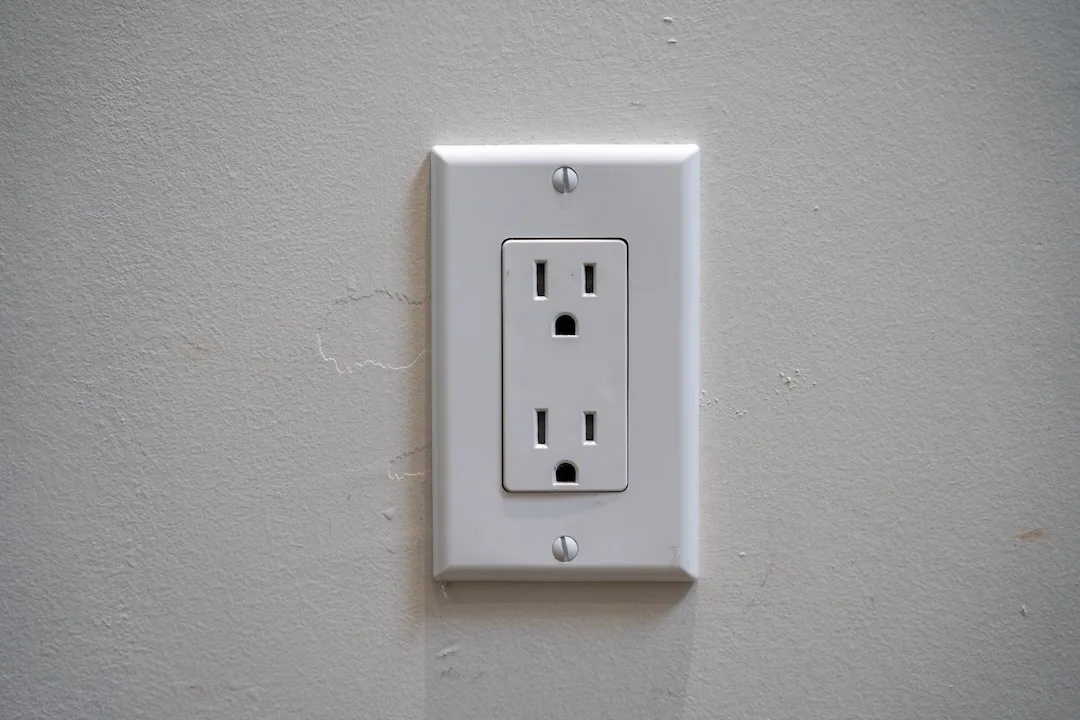
If some outlets in your home suddenly stop working, it can be frustrating and confusing. In many Nassau County homes, this issue shows up without warning. One day everything is fine, and the next, a section of outlets just stops providing power.
The good news is that in many cases, the cause is something simple. The bad news is that it can also point to a deeper electrical issue that should not be ignored.
In this guide, we’ll break down why outlets stop working, what you can safely check, and when it’s time to call a licensed electrician.
Why Are Some Outlets Not Working?
When only certain outlets stop working, the issue is usually tied to a specific circuit rather than your entire electrical system.
Here are the most common causes:
1. A Tripped GFCI Outlet
One of the most common reasons outlets stop working is a tripped GFCI outlet.
GFCI outlets are designed to shut off power when they detect a fault. These are typically found in:
- Kitchens
- Bathrooms
- Basements
- Garages
- Outdoor areas
What many homeowners don’t realize is that one GFCI outlet can control multiple outlets downstream.
👉 If one trips, several outlets may stop working at once.
If you’re not familiar with how these work, check out our guide on GFCI outlets and how they protect your home
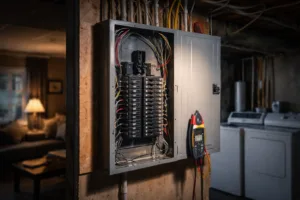
2. A Tripped Breaker (That Doesn’t Look Tripped)
Sometimes a breaker trips but doesn’t fully move to the “off” position.
This makes it easy to miss.
To reset it properly:
- Turn the breaker fully OFF
- Then turn it back ON
If you skip the full reset, the circuit may not restore power.
If this keeps happening, it could point to a larger issue. Learn more about that here:
Why circuit breakers trip and what it means
3. Loose Wiring or Connections
Over time, electrical connections can loosen due to:
- age
- vibration
- normal wear
This can cause outlets to stop working intermittently or completely.
Loose wiring is not something you should try to fix yourself. It can lead to overheating and increases the risk of electrical fires.
4. A Failed Outlet
Sometimes the issue is simply a bad outlet.
Outlets can wear out over time, especially if:
- plugs feel loose
- devices only work at certain angles
- there are visible burn marks
Replacing an outlet is a common repair, but it should still be handled safely and correctly.
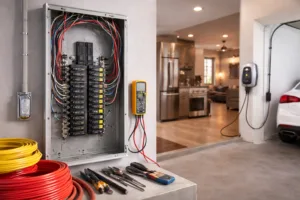
5. A Larger Circuit or Panel Issue
If multiple rooms or large sections of your home are affected, the issue may be deeper.
This could involve:
- overloaded circuits
- panel problems
- damaged wiring
In some cases, this is similar to situations where half your house loses power without a tripped breaker.That’s when it’s time to take the issue more seriously.
What You Can Check First (Safely)
Before calling an electrician, there are a few simple things you can check.
✅ Check for GFCI outlets
- Press the reset button
- Look in nearby rooms, not just where the outlet stopped working
✅ Reset breakers properly
- Turn fully OFF, then back ON
✅ Test nearby outlets
- See if the issue is isolated or part of a larger circuit
What You Should NOT Do
There are a few things homeowners should avoid:
- Do not open outlets or electrical boxes
- Do not replace wiring without proper knowledge
- Do not ignore repeated power loss
Electrical issues are not always visible on the surface. What looks like a simple outage can sometimes be a sign of a larger problem.
When This Becomes a Bigger Problem
Some outlet issues are minor. Others are early warning signs.
Watch for:
- Multiple outlets failing across rooms
- Power coming and going intermittently
- Buzzing or crackling sounds
- Burning smells
- Warm outlets or switches
These symptoms can indicate unsafe conditions that require professional attention.
When to Call an Electrician
You should call a licensed electrician if:
- Resetting breakers does not fix the issue
- GFCI outlets keep tripping
- You are unsure what circuit is affected
- The problem is spreading to other areas
- You notice any signs of heat or burning
At that point, the issue is no longer just inconvenient. It may be unsafe.
Our
<a href=”/electrical-repairs-nassau-county-ny/”>electrical repair services in Nassau County</a>
are designed to quickly identify the root cause and fix the problem safely.
Could This Mean You Need a Panel Upgrade?
In some cases, yes.
If your home is older or your electrical system is overloaded, outlet issues can be a sign that your panel is struggling to keep up.
This is especially common if you’ve added:
- new appliances
- HVAC systems
- EV chargers
- home additions
If your system cannot handle the load, a panel upgrade may be the long-term solution.
How Electricians Diagnose Outlet Problems
When a professional electrician inspects the issue, they typically:
- Test the affected circuit
- Check for voltage and continuity
- Inspect outlets and wiring connections
- Evaluate the breaker and panel
- Identify whether the issue is isolated or system-wide
This process ensures the problem is fixed correctly the first time.
Why You Shouldn’t Ignore Dead Outlets
Even if it seems like a minor inconvenience, ignoring electrical problems can lead to:
- worsening damage
- higher repair costs
- safety risks
Electrical systems are interconnected. A small issue in one area can affect other parts of your home over time.
Final Thoughts
If some outlets in your home stop working, it’s usually a sign that something in your electrical system needs attention.
In many cases, the issue is simple and easy to resolve. In others, it can point to a deeper problem involving wiring, circuits, or your electrical panel.
The key is knowing when to troubleshoot and when to call a professional.
If you’re dealing with outlets that are not working and you’re not sure why, it’s best to have the system inspected.
Need Help?
Haines Electric has been serving Nassau County homeowners for over 50 years.
If you’re dealing with:
- dead outlets
- partial power loss
- tripping breakers
- or any electrical issue
we’re here to help.
👉 Contact us today to schedule an inspection and get your power restored safely.
FAQ
Frequently Asked Questions About Outlets Not Working
Learn why some outlets stop working, what you can safely check first, and when it is time to call a licensed electrician in Nassau County.
Why did some outlets in my house stop working?
Some outlets stop working because of a tripped GFCI outlet, a partially tripped breaker, a loose wiring connection, a failed outlet, or a larger circuit problem. In many homes, the affected outlets are connected to the same circuit, which is why several can stop working at once.
If the issue is limited to just a few outlets, it may be isolated to one circuit. If multiple rooms are affected, the problem may be tied to a larger electrical issue.
Can a GFCI outlet cause multiple outlets to stop working?
Yes. A single GFCI outlet can protect multiple outlets on the same circuit. When that GFCI trips, it can shut off power to other outlets downstream, even if those outlets do not have reset buttons on them.
This is one of the most common reasons homeowners suddenly lose power to kitchen, bathroom, basement, garage, or outdoor outlets.
What should I check before calling an electrician?
First, check nearby GFCI outlets and press the reset button. Then check your electrical panel and reset any breakers by turning them fully off and then back on.
You can also test nearby outlets to see if the problem is isolated or affecting a larger area. If these steps do not restore power, the issue may need professional diagnosis.
Can a bad outlet stop working even if the breaker is fine?
Yes. Outlets can wear out over time and fail even when the breaker is still working normally. This is more likely if the outlet feels loose, shows discoloration, has burn marks, or only works when a plug is held a certain way.
A failed outlet should be replaced properly to restore safe operation and prevent future issues.
Is it dangerous if outlets stop working?
It can be. In some cases, dead outlets are caused by a harmless GFCI trip. In other cases, they can be a sign of loose connections, damaged wiring, overloaded circuits, or a failing electrical component.
If you notice buzzing sounds, burning smells, warm outlets, or repeated loss of power, the issue should be inspected by a licensed electrician right away.
When should I call an electrician for outlets not working?
You should call an electrician if resetting GFCI outlets and breakers does not restore power, if multiple outlets or rooms are affected, or if the issue keeps coming back.
You should also call immediately if you notice heat, sparks, burning smells, or intermittent power, since those can point to more serious electrical problems.