Understanding the Hidden Threat of Winter Power Surges
When cold weather hits Long Island, homeowners prepare for snow and icy roads — but few realize electrical storms can be just as damaging.
Each winter, power surges caused by storms, utility fluctuations, and heavy heating loads silently destroy electronics and weaken wiring systems.
What Causes Power Surges During Winter Storms?
A power surge is a sudden increase in voltage above the normal 120 volts supplied to homes.
Even a brief spike — lasting less than a second — can fry circuit boards, trip breakers, and damage appliances.
Winter storm surges often happen because:
- Ice or wind knocks down power lines.
- Utility companies switch grid transformers rapidly.
- Home generators or heaters overload circuits.
External vs. Internal Power Surges
- External surges come from outside — typically storms or grid switching.
- Internal surges happen inside your home every time a motor-driven device (like a heater or refrigerator) turns on or off.
In fact, 60–80% of surges originate within your own home.
Why Winter Makes Power Surges More Dangerous
Winter puts your electrical system under maximum strain:
- Space heaters and furnaces draw large startup currents.
- Power outages and generator use increase backfeed risks.
- Snow or moisture near outdoor panels can cause ground faults.
All these conditions combine to create the perfect storm — literally — for surge-related damage.
Common Signs of Surge Damage in Your Home
Watch for these early warning signs before a full system failure occurs:
⚡ Flickering or Dimming Lights
Lights dimming when a heater or microwave runs signal voltage instability.
🔌 Burned Out Electronics or Appliances
Frequent replacements of chargers, routers, or TVs indicate repeated surges.
🔥 Tripped Breakers or Melted Plugs
A surge can overload circuits instantly, leaving heat marks or even melting plugs.
If you notice any of these, it’s time to call Haines Electric for a full inspection.
Top Causes of Winter Power Surges in Long Island Homes
| Cause | Risk Level | Description |
|---|---|---|
| Lightning & Downed Power Lines | High | Storms send voltage spikes through utility lines. |
| Generator Backfeed | High | Improper generator hookups feed power backward into the grid. |
| HVAC and Space Heater Overloads | Moderate | High inrush current can create internal surges. |
| Utility Grid Switching & Transformer Spikes | Moderate | Rapid voltage adjustments during storms. |
| Frozen Moisture in Outdoor Panels | Low | Water expands and contracts, causing short bursts of conductivity. |
How Whole-Home Surge Protection Works
Panel-Based Surge Protectors (Type 1 & Type 2)
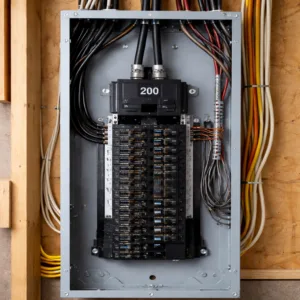
Installed directly on your home’s main electrical panel, these devices block high voltage from entering your wiring system.
They divert excess energy safely into the ground before it reaches your circuits.
Outlet-Level Surge Protectors (Type 3)
These are the familiar plug-in strips — useful, but limited. They can’t handle large surges from lightning or grid spikes.
They’re best used as secondary protection for electronics like TVs and computers.
Layered Protection
The best approach is a three-tier system:
- Whole-home protector at your service panel
- Secondary protectors for sensitive circuits
- Outlet protectors for high-value devices
Benefits of Installing Whole-Home Surge Protection This Winter
1️⃣ Prevents Costly Appliance Damage
A single surge can destroy appliances worth thousands. Protecting them costs a fraction of replacement.
2️⃣ Reduces Fire Risk
Sudden voltage spikes can overheat wires inside walls — surge protectors prevent this ignition source.
3️⃣ Safeguards Sensitive Electronics
Modern homes depend on microprocessors in thermostats, smart TVs, routers, and even washers. Surges degrade these components silently over time.
4️⃣ Extends Your Electrical System’s Lifespan
Surge protection reduces wear on breakers, outlets, and panels — extending their functional life.
5️⃣ Boosts Insurance and Home Value
Many insurers now offer discounts for homes with certified surge protection installed by a licensed electrician.
Real Data: How Common Are Winter Power Surges?
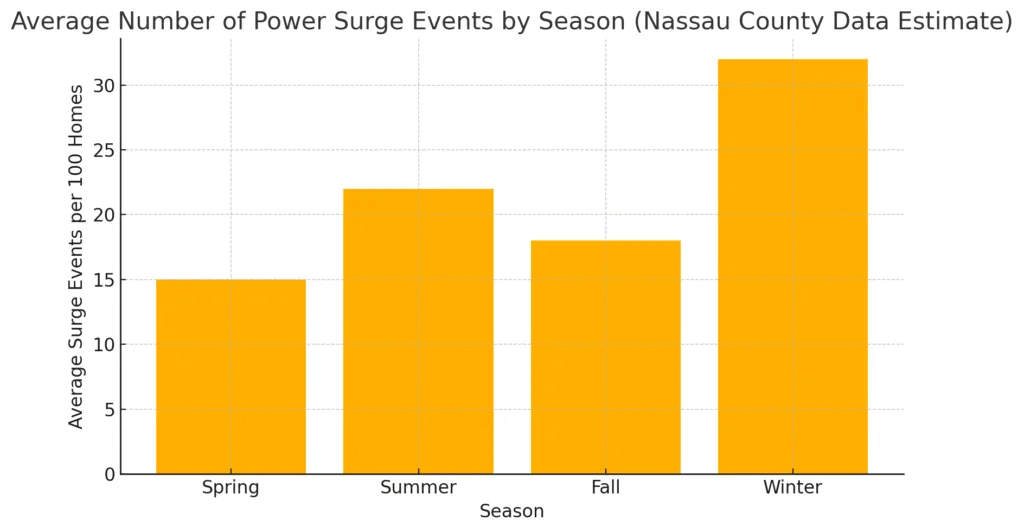
Recent data shows winter leads all seasons in power surge frequency — due to storms, grid strain, and heavy heating use.
📊 Average Power Surge Events by Season (Nassau County Estimate)
| Season | Average Surge Events per 100 Homes |
|---|---|
| Spring | 15 |
| Summer | 22 |
| Fall | 18 |
| Winter | 32 |
As seen above, winter surge incidents are nearly 45% higher than other seasons.
This surge activity explains the rise in electronic failures and panel replacements during the December–March period across Long Island.
How to Choose the Right Surge Protector for Your Home
Check Joule Rating and Response Time
The higher the joule rating, the more energy it can absorb.
For whole-home units, look for 2,000+ joules and a response time under 1 nanosecond.
Look for UL 1449 Certification
This ensures the unit meets national safety standards for surge suppression.
Hire a Licensed Electrician for Installation
Surge protectors must be installed on the main service panel — this requires professional experience and code compliance.
DIY installation can void warranties or create grounding issues.
Why Haines Electric Recommends Whole-Home Surge Protection
For over 20 years, Haines Electric has safeguarded homes across Nassau County and Long Island from electrical storm damage.
Certified Installations
We use UL-rated surge protectors designed for coastal and storm-prone regions.
Seasonal Safety Inspections
Before winter storms, our electricians inspect panels, grounding rods, and exterior boxes to prevent moisture-related damage.
Trusted Local Experts
From residential upgrades to emergency repairs, Haines Electric provides reliable, code-compliant solutions to keep your home powered safely.
👉 Contact Haines Electric to schedule your winter surge protection inspection today.
FAQs About Surge Protection and Winter Storm Safety
Q1. Can surge protectors stop lightning strikes?
No — they can’t absorb a direct hit, but they can protect your wiring from nearby strikes and utility surges.
Q2. Do I still need outlet surge strips?
Yes, for added defense. Whole-home devices handle big spikes; outlet strips protect smaller electronics.
Q3. How long does a surge protector last?
Most units last 5–10 years depending on surge activity. Haines Electric recommends annual testing during inspections.
Q4. Will it protect my generator or EV charger?
Yes — a properly installed system shields generators, chargers, and solar inverters.
Q5. Can cold weather affect surge protectors?
Extreme cold can slightly reduce sensitivity, but modern units are rated for outdoor conditions.
Q6. How much does whole-home surge protection cost?
Installation typically ranges $300–$800, far less than replacing major appliances after a surge.
Conclusion: Protect Your Home and Peace of Mind This Winter
Winter brings beauty — but also electrical chaos.
With storms, heavy appliance use, and unpredictable outages, surge protection is no longer optional.
By installing a whole-home surge protector with Haines Electric, you can storm-proof your home, safeguard your investments, and rest easy all winter long.
🔌 Book your winter electrical inspection today at HainesElectric.com.