Electric Baseboard Heaters vs. Space Heaters: What’s Safer and More Efficient for Your Home — a detailed comparison of safety, efficiency, and cost to help you choose the best heating solution.
On this page
Introduction
As winter creeps in, keeping your home warm becomes essential. Many homeowners face a common choice: Electric Baseboard Heaters vs. Space Heaters. Which is safer? Which is more energy-efficient? This comprehensive guide breaks down both options so you can confidently select the ideal heating solution for your space, budget, and lifestyle.
Quick Comparison Table: Electric Baseboard Heaters vs. Space Heaters
| Feature | Electric Baseboard Heaters | Space Heaters |
|---|---|---|
| Installation | Wall-mounted, often hardwired by an electrician | Plug-and-play portable unit |
| Heating Method | Convection – warms air along walls and rises | Radiant, convection, or fan-forced depending on model |
| Efficiency | Electric resistance heating converts electricity to heat at the point of use | Same conversion efficiency as electric baseboard heating |
| Safety | Requires correct installation and clearances | Requires safe placement, cord condition and supervised use |
| Cost to Install | Higher (professional installation required) | Very low (ready to use) |
| Operating Cost | Depends on watts, runtime and electricity rate | Depends on watts, runtime and electricity rate |
| Portability | Fixed | Easily moved from room to room |
| Warm-Up Speed | Slow and steady | Immediate heat output |
| Best For | Long-term, zoned, or continuous heating | Quick, short-term, or spot heating |
| Maintenance | Minimal (clean vents occasionally) | Regular cleaning and safe storage required |
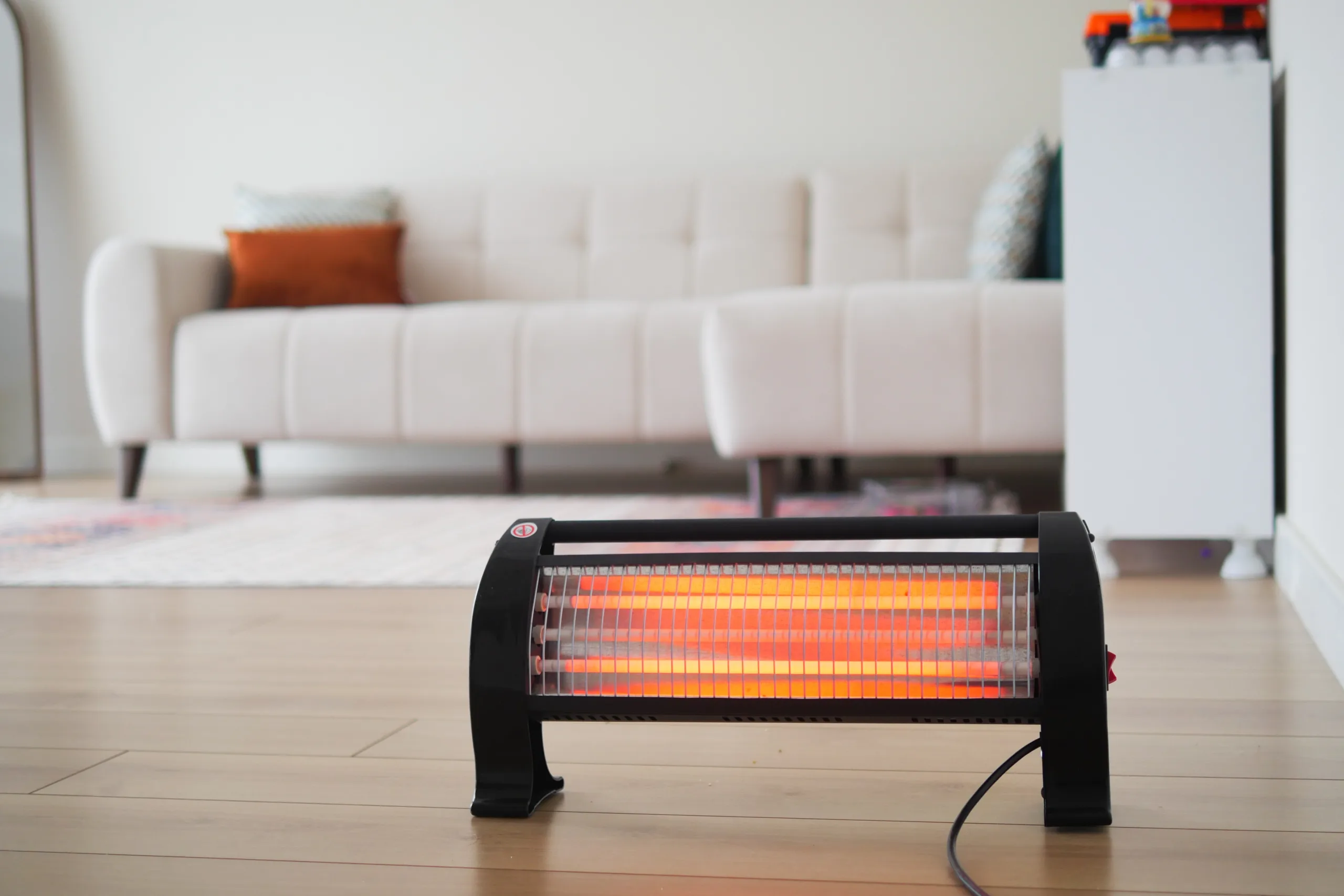
Understanding Electric Baseboard Heaters
Electric baseboard heaters are fixed units typically installed along the wall base. They operate quietly and provide consistent warmth by drawing cool air from the floor, heating it with electric elements, and releasing it upward.
Advantages
- Designed for permanent room heating
- Silent operation, no moving parts
- Maintains even room temperature
- Hardwired models have no trailing power cord
Disadvantages
- Slower to heat up
- Requires professional installation
- Higher initial cost
Understanding Space Heaters
Space heaters are portable devices that quickly heat small areas. They’re ideal for supplemental or temporary heating but require careful handling.
Advantages
- Low purchase cost
- Fast, directed heat output
- Portable and convenient
Disadvantages
- Can be a fire hazard if misused
- Heats unevenly
- Long runtimes can raise electricity costs
Safety Comparison
| Aspect | Baseboard Heaters | Space Heaters |
|---|---|---|
| Fire Risk | Can overheat if blocked or used incorrectly | Can cause fires if too close to combustibles or misused |
| Placement | Keep the model’s required clearances | Keep at least 3 feet from combustibles |
| Children & Pets | Hot surfaces; keep children and pets away | Hot surfaces; supervise use and keep out of reach |
| Maintenance | Follow manual; check for dust or damage | Needs regular checks for dust or damage |
Safety depends on the model, installation and use. Both types require clearances and precautions around children and pets.
Efficiency Comparison
Both electric resistance heater types convert virtually all electricity they use into heat in the room; running cost still depends on use:
- Baseboard heaters can provide permanent, whole-room heating.
- Space heaters excel at short bursts or localized warmth.
- Continuous use of either heater can quickly raise your electric bill.
Compare wattage, actual heating time and your electricity rate. Thermostat settings, room size and insulation affect how long either heater needs to run.
Installation and Maintenance Tips
For Electric Baseboard Heaters
- Hire a licensed electrician for wiring.
- Follow the manufacturer’s clearance requirements for the front, sides and above; check your model’s manual.
- Dust fins and vents regularly.
For Space Heaters
- Always plug directly into a wall outlet, never an extension cord or power strip.
- Keep flammable objects at least 3 feet away.
- Choose certified models (UL, ETL).
- Never leave running unattended or while sleeping.
When to Choose Which
| Scenario | Best Option |
|---|---|
| Long-term room heating | Electric Baseboard Heater |
| Temporary spot heating | Space Heater |
| Low upfront budget | Space Heater |
| Concerned about safety | Choose a suitable model and follow its safety instructions |
| Renters needing portable heat | Space Heater |
| Homeowners planning upgrades | Baseboard Heater |
Expert Verdict
- Safety: Both types require safe clearances and careful use; baseboards can still get hot.
- Efficiency: Neither type is automatically cheaper; compare wattage, runtime and electricity rate.
- Convenience: Space Heaters are portable but need supervised use.
Bottom Line:
For regular room heating, consider a properly sized electric baseboard heater.
For temporary warmth, a space heater may help when used safely.
Frequently Asked Questions (FAQs)
Q1: Can a space heater replace a baseboard heater?
A space heater can provide temporary warmth. Whether it heats the room adequately depends on its output and the room’s size and insulation.
Q2: Which costs less to operate?
Neither is automatically cheaper. Equal wattage and heating time mean equal electricity use; your electricity rate determines the cost.
Q3: Are electric baseboard heaters safe for kids and pets?
They can get hot. Keep children and pets away and follow the manufacturer’s safety precautions, including clearances and supervision.
Q4: Do space heaters cause fires?
Yes. Follow CPSC guidance: keep combustibles at least 3 feet away, use a wall outlet without extension cords or power strips, and switch off before sleeping or leaving it unattended.
Q5: Can I use both heaters in one house?
Yes, provided each heater is installed and used according to its instructions and the electrical circuits can safely support the load. If you’re unsure, have a qualified electrician check first.
Q6: What’s more eco-friendly?
Neither is inherently greener. The environmental impact depends on how the electricity is generated and how much you use.
Conclusion
When choosing between Electric Baseboard Heaters vs. Space Heaters, think about your home layout, usage, and safety needs. For permanent room heating, baseboards may suit your needs. For quick, flexible warmth, space heaters can help. Compare actual energy use and follow each model’s safety instructions.
Stay warm, stay safe, and heat smart this winter!
🔗 Further Reading
- U.S. Energy Information Administration – Heating Efficiency and Costs
- Good Housekeeping – Space Heater Safety Tips
About this guide
All advice provided in this guide is for educational purposes only. Haines Electric does not assume any responsibility for the outcomes of attempting home electrical projects. It is always recommended to consult with a licensed professional for electrical work to ensure safety and compliance with local codes and regulations.