Understanding Why Circuit Breakers Trip in Winter
What Does a Circuit Breaker Actually Do?
A circuit breaker is your home’s first line of defense against electrical overloads and fires.
When too much current flows through a circuit, the breaker “trips” — shutting off power to prevent overheating.
In essence, it’s a resettable fuse that protects both your wiring and appliances.
During winter, with extra heating devices and lights running simultaneously, that protection kicks in far more often.
Winter Electrical Demand: The Hidden Culprit
Cold weather means:
- Space heaters in bedrooms and living rooms
- Electric blankets, heated mattress pads
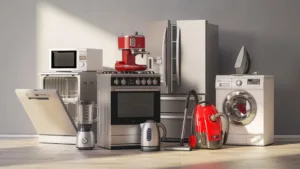
- Additional use of dryers, dehumidifiers, and ovens
- Decorative lighting or outdoor inflatables
Each of these draws significant power — and when combined on the same circuit, they easily exceed safe limits.
Even newer homes can experience repeated trips if too many high-wattage devices share one circuit.
Common Causes of Winter Breaker Trips
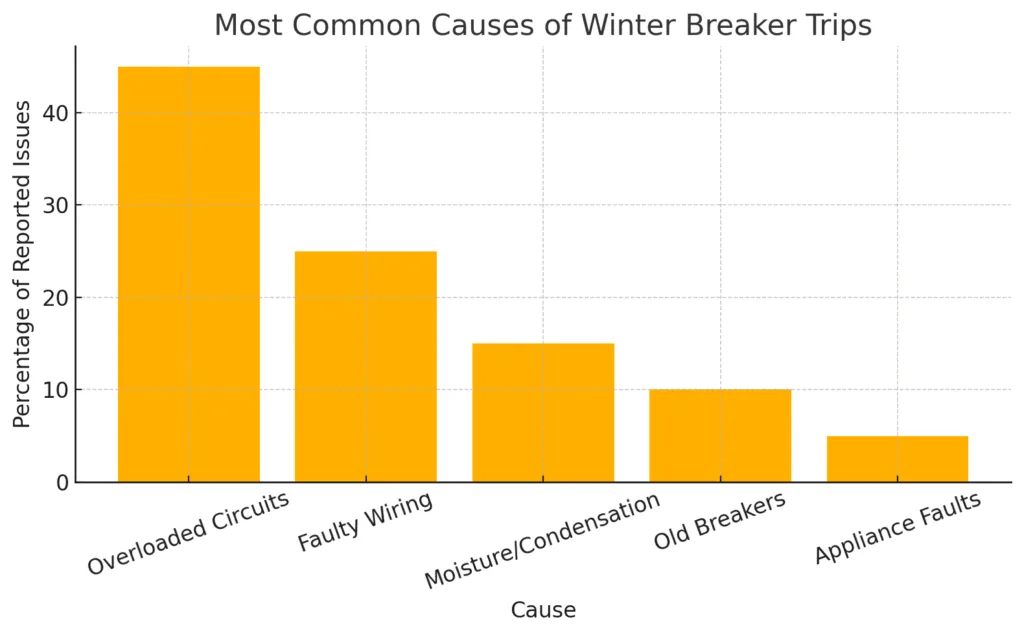
Below is a breakdown of the most frequent causes of breaker tripping in winter, based on residential service data across Nassau County:
| Cause | Percentage of Reported Issues |
|---|---|
| Overloaded Circuits | 45% |
| Faulty Wiring | 25% |
| Moisture/Condensation | 15% |
| Old Breakers | 10% |
| Appliance Faults | 5% |
1. Overloaded Circuits from Heaters and Appliances
This is the #1 reason for winter breaker trips.
A standard 15-amp circuit supports about 1,800 watts of power. Two 1,500-watt space heaters running together already push it past capacity.
Signs of overload include:
- Breaker trips when heaters or dryers start
- Dimming lights when turning on multiple devices
- Warm wall outlets
Quick Fix: Unplug one device or move it to another outlet on a separate circuit.
Long-Term Fix: Have a licensed electrician evaluate load distribution or add a dedicated circuit.
2. Faulty Wiring or Loose Connections
Older Long Island homes (especially pre-1980) may have:
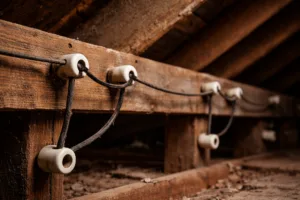
- Aluminum or brittle copper wiring
- Corroded connections
- Rodents damaging insulation in attics or crawl spaces
Cold weather causes metal to contract, loosening connections and creating resistance. This heat buildup triggers breaker trips and poses fire risks.
Solution: Schedule a wiring inspection to detect hidden faults before winter demand peaks.
3. Moisture and Condensation in Outdoor Panels
Winter storms, freezing rain, or snowmelt can enter exterior electrical boxes, leading to short circuits or ground-fault trips.
If a GFCI breaker controls outdoor circuits, moisture will trip it immediately to protect against electrocution.
Solution: Keep exterior boxes sealed and covered; replace damaged weatherproof covers immediately.
4. Old or Weak Breakers
Circuit breakers can weaken after 15–20 years of continuous use.
If a specific breaker keeps tripping easily — even under normal load — it may no longer hold the rated current.
Solution: Have the breaker tested with an amp meter or replaced during a panel upgrade.
5. Appliance Faults
Sometimes the problem isn’t the breaker at all.
A short in a space heater, coffee maker, or power strip can draw excess current and cause immediate trips.
Test Tip: Plug the appliance into another outlet. If that breaker trips too, the appliance is the culprit.
How to Know When It’s a Bigger Problem
Frequent Tripping in One Area
If a single room loses power often, that circuit is likely overloaded or partially damaged.
Burning Odor or Scorch Marks
A burning smell or dark marks near your panel indicate overheating or arcing — a fire hazard.
Turn off power and call a professional immediately.
Dimming or Flickering Lights
Lights that flicker when large appliances start may signal poor connections or an undersized service panel.
DIY Troubleshooting: Safe First Steps
Before calling a professional, homeowners can perform a few non-invasive checks.
- Unplug Nonessential Devices
Reduce load by unplugging one or more heaters, lamps, or kitchen gadgets. - Reset the Breaker Correctly
Move the switch fully to the OFF position before flipping it back ON.
If it trips again right away, stop — continuing can cause damage. - Check for Moisture or Ice
Inspect outdoor outlets or panels for condensation. Dry them gently and protect them with weatherproof covers. - Label Your Circuits
Knowing which outlets and rooms share circuits helps prevent accidental overloads.
When to Call a Licensed Electrician
Sometimes, the issue lies beyond simple fixes.
Call Haines Electric if you notice any of the following:
Recurring Trips Even After Resetting
Indicates persistent overload or damaged wiring.
Old Electrical Panels
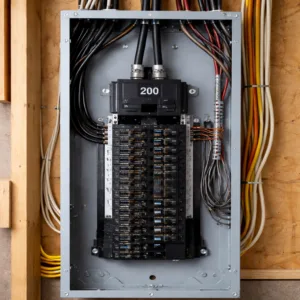
If your panel is still rated at 100 amps (common in older homes), upgrading to a 200-amp panel will support modern winter loads safely.
Burning Smell or Buzzing Panel
These are emergency signs — shut off power and call immediately.
Whole-Home Electrical Inspections
A pre-winter inspection can prevent costly repairs by identifying loose wires, corroded breakers, and moisture entry points early.
Haines Electric: Trusted Electrical Experts Serving Long Island
For over two decades, Haines Electric has helped Long Island and Nassau County homeowners stay safe and powered year-round.
We provide:
- Residential & Emergency Electrical Services
- Panel Upgrades & Circuit Repairs
- Whole-Home Electrical Inspections
- Backup Generator Installation & Maintenance
Whether it’s a single tripped breaker or a full system upgrade, our licensed electricians deliver safe, code-compliant, and lasting solutions.
👉 Schedule your winter electrical checkup today at HainesElectric.com
FAQs About Circuit Breakers and Winter Power Issues
Q1. Why does my breaker trip only during the winter?
Winter appliances (heaters, lights, dehumidifiers) draw extra current, often exceeding circuit limits.
Q2. Can cold weather damage breakers?
Yes — temperature fluctuations can cause metal fatigue in breakers and wiring.
Q3. How many times can I reset a breaker safely?
A few times is fine, but repeated trips mean there’s a deeper electrical issue.
Q4. Should I replace old breakers regularly?
Breakers typically last up to 20 years, but they should be checked during every major home inspection.
Q5. How can I prevent winter overloads?
Distribute devices evenly across outlets, avoid daisy-chained power strips, and consider a panel upgrade.
Conclusion: Keep Your Home Safe and Powered This Winter
If your breaker keeps tripping this winter, it’s not just a nuisance — it’s a warning sign.
Overloaded circuits, aging wiring, or moisture can compromise your home’s safety.
By performing basic load management, scheduling a professional inspection, and upgrading outdated systems, you can enjoy warmth and reliability all season long.
🔌 Contact Haines Electric today for trusted, local service in Nassau County and Long Island — and keep your home safe, bright, and powered this winter.