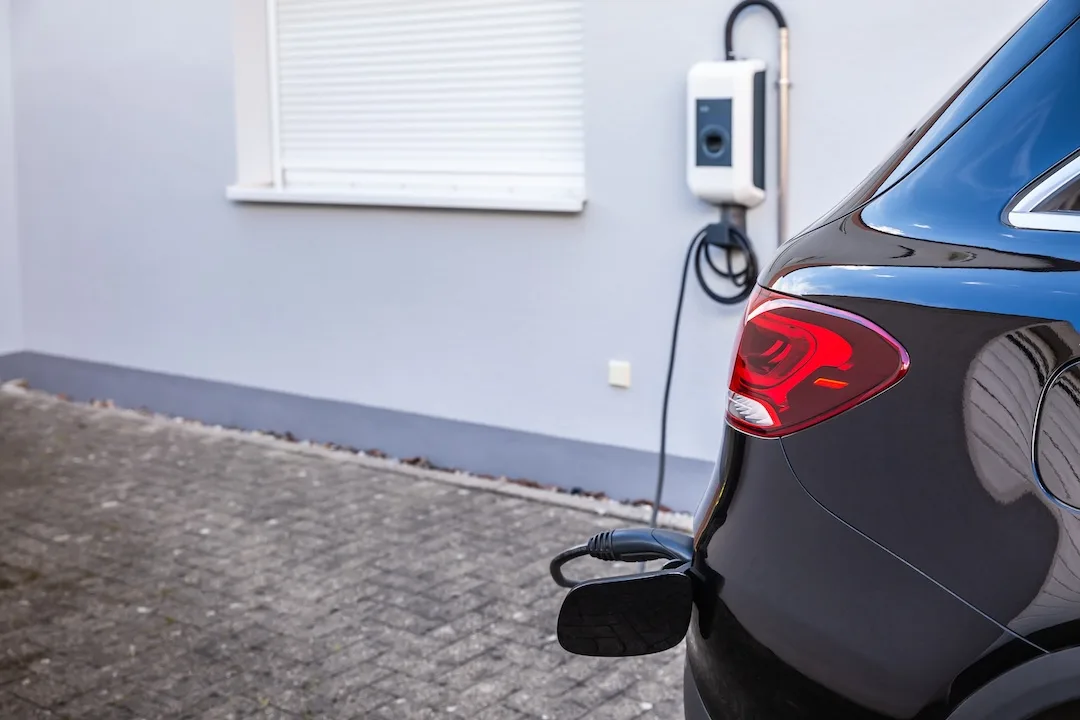
If you recently bought an electric vehicle or are planning to buy one, installing a Level 2 charger at home is one of the most convenient upgrades you can make. Instead of relying on slow Level 1 charging or public charging stations, a properly installed Level 2 charger can recharge your vehicle much faster right in your garage or driveway.
One of the first questions Nassau County homeowners ask is simple: how much does it cost to install a Level 2 EV charger?
For many straightforward home installations, a reasonable starting range is approximately $850 to $2,000+ for the electrical installation. However, the final price can vary significantly depending on the distance from the electrical panel, charger location, panel capacity, wiring method, permit requirements, and whether additional electrical upgrades are needed.
What Does a Level 2 EV Charger Installation Cost in Nassau County?
The cost of installing a Level 2 charger varies from house to house because the charger is only one part of the project.
The electrical installation typically includes a new dedicated 240-volt circuit, properly sized wiring, circuit protection, electrical connections, and installation of the charging equipment.
For many Nassau County homes, the project falls into one of three general categories:
| Installation Type | Typical Situation | Cost Impact |
|---|---|---|
| Simple Installation | Panel has capacity and charger is located close to the electrical panel | Usually the least expensive |
| Moderate Installation | Longer wiring run, finished walls, outdoor location, conduit, or additional installation work | Usually higher |
| Complex Installation | Panel upgrade, detached garage, trenching, subpanel, service work, or difficult wiring route | Can be significantly higher |
This is why two homeowners installing the exact same Tesla Wall Connector or universal EV charger can receive very different installation estimates.
What Is Included in EV Charger Installation?
A Level 2 charger installation involves more than attaching a charging station to the wall.
Depending on the project, the electrical work may include:
- Evaluating the home’s electrical panel and available capacity
- Reviewing the EV charger manufacturer’s electrical requirements
- Installing a dedicated 240-volt circuit
- Installing properly sized wiring
- Adding a compatible circuit breaker
- Running conduit where required
- Hardwiring the EV charger or installing the appropriate charging connection
- Mounting the charger in the garage or outdoor parking area
- Testing the completed charging system
- Permit and inspection coordination when required
Haines Electric provides EV charger installation throughout Nassau County, including Level 2 chargers, Tesla Wall Connectors, dedicated circuits, outdoor charger installations, panel evaluations, and related electrical upgrades.
What Factors Affect Level 2 Charger Installation Cost?
The biggest cost variables are usually related to the home’s electrical system and the physical distance between the electrical panel and the charger.
Here are the factors that typically have the greatest impact.
1. Distance From the Electrical Panel
Wiring distance is one of the biggest factors affecting installation cost.
If your electrical panel is located on the garage wall and the charger will be installed only a few feet away, the project may be relatively straightforward.
If the panel is located on the opposite side of the house or in a basement far from the driveway, significantly more wiring, labor, conduit, and wall access may be required.
Short Wiring Run
A charger installed close to the electrical panel usually requires less wire, less labor, and fewer penetrations through the home.
Long Wiring Run
Longer distances can require considerably more cable or conduit and may involve finished walls, ceilings, basements, attics, or exterior routing.
2. Your Electrical Panel Capacity
Level 2 EV chargers can place a substantial continuous electrical load on a home.
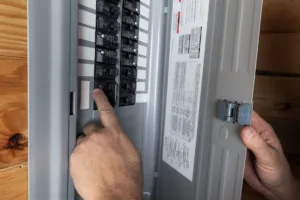
Before adding the charger, an electrician needs to determine whether the existing electrical service has enough capacity to support it along with the rest of the home’s electrical demand.
Having an empty breaker space does not automatically mean the home has enough capacity for an EV charger.
The electrician may need to consider loads such as:
- Central air conditioning
- Electric heat or heat pumps
- Electric water heaters
- Electric ranges and ovens
- Electric dryers
- Pool and hot tub equipment
- Other large appliances
- Existing EV chargers
You can learn more about this in our guide to how much electrical power a Nassau County home needs.
3. Whether You Need an Electrical Panel Upgrade
Not every EV charger installation requires a new electrical panel.
Many homes already have adequate capacity to add a properly sized EV charging circuit. However, some older Nassau County homes may have smaller or already heavily loaded electrical services.
A panel or service upgrade may need to be considered if:
- The existing panel is already full
- The panel is outdated or damaged
- The home’s available electrical capacity is insufficient
- Several major electric appliances have recently been added
- You are planning additional electrification projects
- The existing equipment cannot safely accommodate the proposed charger
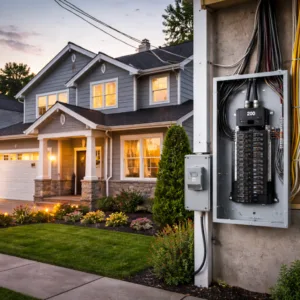
If additional capacity is required, Haines Electric provides electrical panel upgrades in Nassau County for homes that need more room or electrical capacity.
4. Charger Amperage
Not every Level 2 charger operates at the same charging rate.
The charger’s electrical requirements determine the circuit size, wire size, breaker configuration, and other installation details.
Higher-powered charging can provide faster charging when the vehicle supports it, but it can also place greater demand on the home’s electrical system.
The fastest charger is not automatically the best choice for every homeowner.
Your daily driving distance, vehicle charging capability, overnight charging window, electrical panel capacity, and budget should all be considered when deciding how much charging power you actually need.
Our guide on how to choose the right EV charger for your home explains the different charging options in more detail.
5. Hardwired Charger vs. Plug-In Charger
Many Level 2 chargers can be installed as hardwired equipment, while some models are designed to connect through a compatible 240-volt receptacle.
The correct setup depends on the charger, installation location, electrical requirements, and applicable local rules.
Hardwired installations are common for permanent home charging stations and can be especially practical for outdoor installations.
Your electrician can review the charger specifications and determine the appropriate installation method.
6. Indoor vs. Outdoor EV Charger Installation
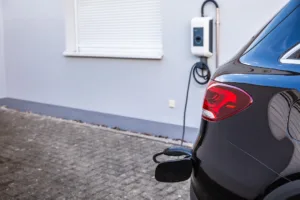
Many Nassau County homeowners park in driveways rather than enclosed garages, so outdoor EV charger installations are extremely common.
An exterior installation may require:
- Outdoor-rated charging equipment
- Weather-resistant electrical components
- Exterior conduit
- Additional mounting hardware
- Longer wiring routes
- Protection from physical damage
Outdoor installation can still be straightforward, but the charger and electrical system must be suitable for the environment where they are installed.
7. Detached Garages
A detached garage can make an EV charger installation more involved.
Depending on the existing electrical setup, the project may require underground wiring, trenching, conduit, a larger garage feeder, or a new subpanel.
The distance between the house and detached garage can have a major impact on material and labor costs.
8. Trenching
If the charger is installed away from the house or electrical panel, underground wiring may be necessary.
Trenching adds labor and materials and may require additional planning around:
- Driveways
- Walkways
- Landscaping
- Sprinkler systems
- Underground utilities
- Property layout
A charger mounted directly on the home will usually be less complicated than one requiring a long underground run to a remote parking location.
9. Finished Walls and Ceilings
The easiest electrical routes are not always accessible in finished homes.
If wiring has to travel through finished ceilings, walls, or other difficult areas, installation can require additional labor and planning.
An experienced electrician will look for a practical route that provides a proper installation while minimizing unnecessary disruption to the home.
10. Permits and Electrical Inspections
EV charger installations commonly involve new 240-volt circuits and electrical work that may require permits and inspections depending on the municipality.
Nassau County includes multiple towns, cities, and incorporated villages, so requirements can vary depending on the exact property location and project scope.
Haines Electric can help homeowners navigate the electrical requirements for their installation.
For a more detailed explanation, read: Do I Need a Permit to Install an EV Charger on Long Island?
How Much Does the EV Charger Itself Cost?
Remember that the price of the EV charging unit and the price of installing it are two different costs.
Charger prices vary considerably based on:
- Brand
- Charging output
- Connector type
- Wi-Fi connectivity
- Energy monitoring
- Scheduling features
- Outdoor ratings
- Load-management capabilities
You do not necessarily need the most expensive charger available. A reliable charger that matches your vehicle, home, and daily driving habits may provide everything you need.
How Much Does a Tesla Wall Connector Installation Cost?
Tesla Wall Connector installation follows the same general pricing principles as other Level 2 chargers.
The biggest variables are usually:
- Distance between the Tesla charger and electrical panel
- Available electrical capacity
- Required circuit size
- Indoor or outdoor installation
- Wiring and conduit requirements
- Whether panel or service work is needed
A Tesla Wall Connector installed a few feet from a properly sized electrical panel will generally cost less to install than the same charger located across the property from the panel.
For additional Tesla-specific information, see our Long Island Tesla and EV charger installation guide.
Do I Need a 200-Amp Panel for a Level 2 Charger?
Not necessarily.
Electrical service size is important, but the correct answer depends on the home’s actual electrical demand.
A home with a larger service can still have limited available capacity if it has many major electrical loads. Likewise, some homes with smaller services may be able to support an EV charging solution after a proper evaluation.
An electrician should perform the appropriate electrical assessment rather than assuming that every EV owner automatically needs a 200-amp service.
If your panel needs additional capacity, learn more about Haines Electric’s electrical panel services.
Can You Install an EV Charger Without Upgrading the Panel?
Yes, many homeowners can.
If your existing panel is in good condition, has the appropriate breaker space, and has enough available electrical capacity, a dedicated EV charging circuit may be added without replacing the panel.
This is why the panel evaluation is such an important part of an EV charger estimate.
It prevents homeowners from assuming a major panel upgrade is required when it may not be, while also identifying situations where additional capacity really is needed.
Why Does a Longer EV Charger Wire Run Cost More?
Level 2 EV charging circuits can require larger conductors than ordinary household outlets.
As the distance increases, so does the amount of electrical material and labor required.
A longer run may also require:
- More conduit
- Additional fittings
- More wall or ceiling access
- Exterior routing
- Underground work
- More installation time
That is why charger placement can affect the estimate substantially.
Does a Level 2 EV Charger Need a Dedicated Circuit?
Level 2 home charging is generally installed using a dedicated 240-volt circuit designed around the charger’s electrical requirements.
The circuit should not simply be added to an existing general-purpose outlet circuit.
If you want to understand dedicated circuits in more detail, read our guide: What Is a Dedicated Circuit and Which Appliances Need One?
Can I Use an Existing Dryer Outlet for My EV Charger?
Homeowners sometimes ask whether they can avoid installation costs by connecting an EV charger to an existing dryer receptacle.
That should not be assumed to be appropriate simply because both involve 240 volts.
The existing circuit, receptacle, wiring, breaker, equipment rating, location, and electrical load all need to be evaluated.
EV charging is a sustained electrical load, so the circuit needs to be properly designed for the charging equipment being used.
Can I Install the EV Charger Myself?
Installing a Level 2 charger typically involves electrical panel work, a new 240-volt branch circuit, properly sized wiring, circuit protection, and local electrical requirements.
This is not the same as mounting an ordinary household appliance.
Incorrect circuit sizing, loose electrical connections, improper breaker selection, or inadequate panel capacity can create serious electrical and fire hazards.
Professional installation also gives the electrician an opportunity to evaluate the rest of the electrical system before adding the new load.
Are There EV Charger Rebates on Long Island?
Incentive programs can change, so homeowners should always verify current eligibility before purchasing equipment.
As of August 2026, PSEG Long Island offers qualifying residential customers a rebate toward eligible Level 2 charging equipment. The standard rebate is currently $100, with additional assistance available for certain qualifying customers.
Charger eligibility and program requirements apply, so homeowners should confirm the current program directly with PSEG Long Island before choosing equipment based on a rebate.
How Can You Keep EV Charger Installation Costs Down?
The goal should never be to cut corners on the electrical work, but thoughtful planning can sometimes make the installation simpler.
- Have the electrical panel evaluated before purchasing equipment
- Choose a charger that matches your actual charging needs
- Consider charger locations closer to the electrical panel
- Plan the charger before renovating a garage or driveway
- Tell the electrician about future EV or electrical plans
- Check current PSEG Long Island charger incentives
- Get a site-specific estimate instead of relying on online averages
A straightforward installation planned correctly from the beginning is usually preferable to purchasing equipment first and discovering later that significant additional work is required.
Is a Level 2 Home Charger Worth the Cost?
For many EV owners, yes.
Level 1 charging uses a standard 120-volt outlet and can be sufficient for drivers with very limited daily mileage, but it charges relatively slowly.
Level 2 charging provides much faster home charging and allows most EV owners to plug in when they get home and begin the next day with substantially more available range.
Benefits include:
- Faster charging at home
- Less reliance on public charging stations
- Convenient overnight charging
- Charging schedules through compatible smart chargers
- A permanent charging setup designed specifically for your home
- Convenience for households with daily EV commuting
What Should I Have Ready Before Requesting an EV Charger Estimate?
Providing a few details can make the estimate process easier.
Helpful information includes:
- Your vehicle make and model
- The charger model you purchased or are considering
- Where the vehicle is normally parked
- Where you would like the charger mounted
- The location of your electrical panel
- Whether the garage is attached or detached
- Whether the installation will be indoors or outdoors
- Any future plans for a second EV
The electrician can then evaluate the electrical system itself and determine the appropriate installation.
Why Online EV Charger Cost Calculators Can Be Misleading
Online calculators can give homeowners a rough idea of potential pricing, but they cannot see what is inside your electrical panel or determine the most practical wiring route through your property.
Two homes on the same Nassau County street can require very different installations.
One homeowner may have a modern panel on the garage wall with available capacity. The neighbor may have an older panel in the basement on the opposite side of the house.
Even with the same EV and charger, the electrical projects are completely different.
A site-specific electrical evaluation is the best way to determine an accurate installation price.
EV Charger Installation in Older Nassau County Homes
Many Nassau County communities have homes built decades before electric vehicles, heat pumps, modern air conditioning, and today’s collection of high-demand electrical appliances became common.
Older homes may have:
- 100-amp electrical services
- Panels with limited breaker space
- Older wiring
- Previous additions or electrical modifications
- Long wiring distances between the panel and driveway
None of those automatically prevent you from installing a home charger. They simply make a professional electrical evaluation more important.
What Does Haines Electric Check Before Installing an EV Charger?
A proper EV charger installation begins with determining what the charger and home actually require.
The evaluation may include:
- Reviewing your charging equipment. The charger’s voltage, current requirements, manufacturer specifications, and installation method are reviewed.
- Checking the electrical panel. The electrician evaluates panel condition, breaker space, equipment compatibility, and electrical capacity.
- Reviewing the home’s electrical demand. Existing major loads are considered before adding EV charging.
- Planning the wiring route. The most practical path from the electrical panel to the charger location is identified.
- Reviewing the installation location. Garage, driveway, outdoor exposure, mounting location, and charging-cable reach are considered.
- Determining whether additional work is needed. Panel upgrades, subpanels, trenching, or other electrical improvements can be identified before installation begins.
Get an Accurate Level 2 EV Charger Installation Price
The most useful EV charger estimate is one based on your actual home, not a national average.
Haines Electric installs Level 2 charging systems for Tesla, Ford, Chevy, Hyundai, Kia, Nissan, Volkswagen, BMW, Audi, Porsche, and many other electric vehicles throughout Nassau County.
Whether your installation requires a short dedicated circuit next to the panel or a more complex wiring run to an outdoor driveway, the electrical system can be evaluated before the work begins so you know what the project requires.
Need an EV Charger Installation Estimate in Nassau County?
Haines Electric has served Nassau County homeowners since 1971. We install Level 2 home EV chargers, Tesla Wall Connectors, dedicated 240-volt circuits, outdoor charging stations, and related electrical upgrades.
We can evaluate your charger location, electrical panel, available capacity, and wiring route and provide an estimate based on your actual home.
Request Your EV Charger EstimateEV Charger Cost FAQ
Level 2 EV Charger Installation Cost Questions
How much does it cost to install a Level 2 EV charger in Nassau County?
Many straightforward Level 2 EV charger installations may fall around $850 to $2,000+ for the electrical installation. The actual cost depends on panel capacity, wiring distance, charger location, circuit requirements, permits, and whether additional electrical upgrades are necessary.
What makes an EV charger installation more expensive?
Longer wiring runs, finished walls, outdoor installations, trenching, detached garages, subpanels, limited electrical capacity, and panel upgrades can all increase the total installation cost.
Does a Level 2 EV charger need a dedicated circuit?
Level 2 home charging is generally installed on a dedicated 240-volt circuit designed around the electrical requirements of the charging equipment. The circuit, breaker, and wiring must be properly sized for the charger.
Do I need a 200-amp electrical panel for an EV charger?
Not necessarily. The important issue is whether the home’s electrical system has sufficient available capacity for the proposed EV charging load. An electrician should evaluate the panel, electrical service, and existing household loads before determining whether an upgrade is necessary.
Can I install an EV charger without upgrading my electrical panel?
Yes. Many homes already have enough electrical capacity and breaker space to add a dedicated EV charger circuit. A panel upgrade is typically considered only when the existing electrical system cannot properly support the additional load or requires other improvements.
How much does it cost to install a Tesla Wall Connector?
Tesla Wall Connector installation cost depends primarily on the electrical work required rather than the vehicle brand. Panel capacity, wiring distance, charger amperage, mounting location, permits, and whether additional electrical upgrades are needed all affect the final price.
Can I use my dryer outlet for an EV charger?
An existing dryer circuit should not automatically be assumed to be appropriate for EV charging. The receptacle, breaker, wire size, circuit configuration, charger requirements, and electrical load should be evaluated by a licensed electrician.
Does EV charger installation require a permit in Nassau County?
Permit and inspection requirements vary depending on the town, village, property location, and scope of electrical work. Level 2 installations commonly involve a new 240-volt circuit, so homeowners should confirm the applicable local requirements before installation.
Are there rebates for home EV chargers on Long Island?
As of August 2026, PSEG Long Island offers qualifying residential customers a rebate toward eligible Level 2 charging equipment. Incentive programs and eligibility requirements can change, so homeowners should verify the current program before purchasing a charger based on an expected rebate.
Is the federal home EV charger tax credit still available?
The federal Alternative Fuel Vehicle Refueling Property Credit ended for qualifying charging equipment placed in service after June 30, 2026. Homeowners completing installations after that date should not assume the former federal residential EV charger credit is available.
Who installs Level 2 EV chargers in Nassau County?
Haines Electric provides Level 2 EV charger installation throughout Nassau County, including Tesla Wall Connectors, universal home chargers, dedicated circuits, electrical panel evaluations, outdoor installations, and related electrical upgrades.